
Understanding the Schengen 90/180 Day Rule: A Complete Guide
The Schengen 90/180 day rule is one of the most misunderstood travel regulations in Europe. If you are a non-EU citizen travelling to the Schengen Area, this rule governs exactly how long you can stay — and getting it wrong can result in fines, deportation, or a multi-year entry ban.
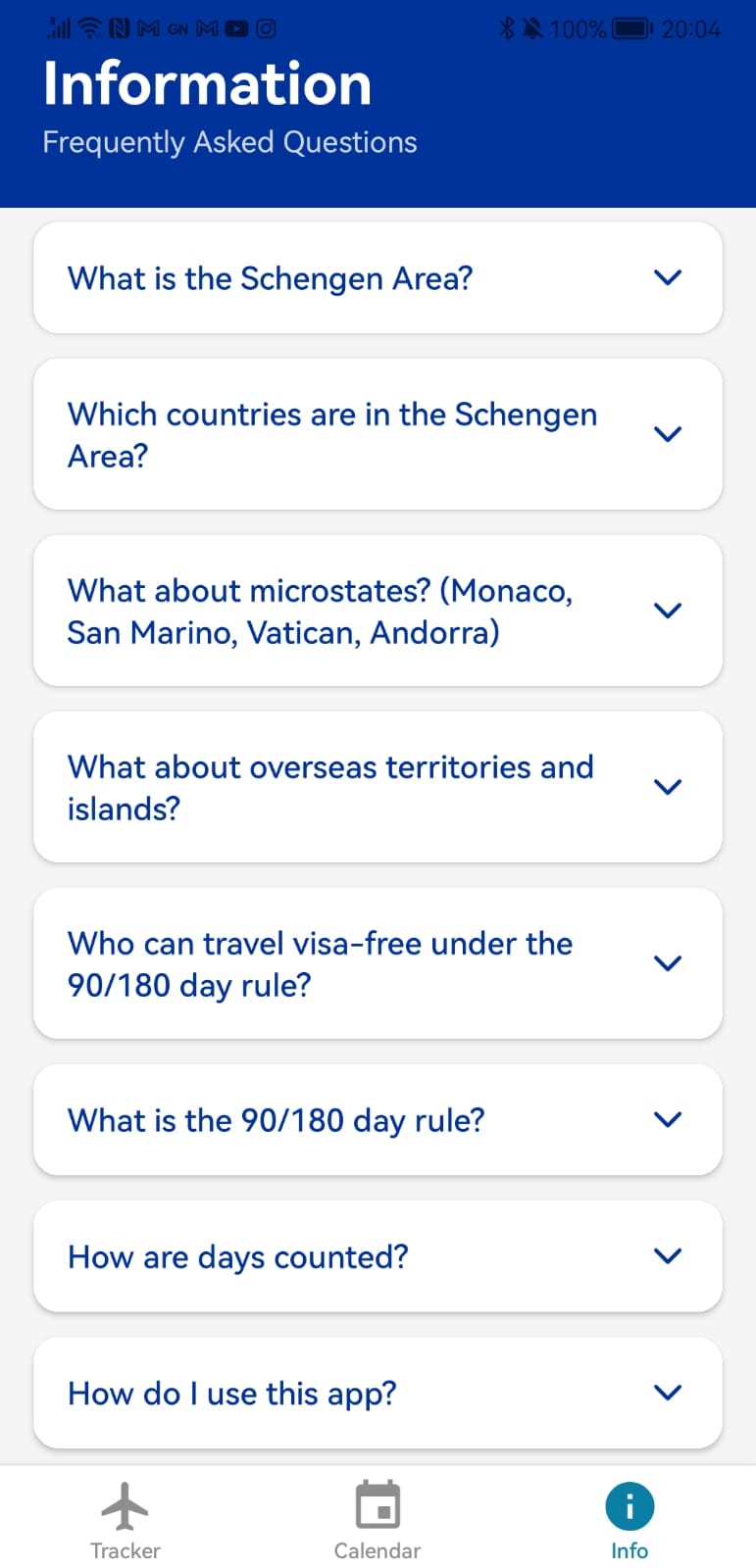
What is the 90/180 Day Rule?
The rule states that you may spend a maximum of 90 days in any 180-day period within the Schengen Area. The 180-day window is a rolling window — not a fixed calendar period — which means it is constantly moving backwards from today's date.
Which Countries Are in the Schengen Area?
The Schengen Area currently includes 29 European countries: Austria, Belgium, Croatia, Czech Republic, Denmark, Estonia, Finland, France, Germany, Greece, Hungary, Iceland, Italy, Latvia, Liechtenstein, Lithuania, Luxembourg, Malta, Netherlands, Norway, Poland, Portugal, Slovakia, Slovenia, Spain, Sweden, and Switzerland. Notably, Ireland, Romania, Bulgaria, and Cyprus are EU members but are not part of Schengen.
How Is the 90-Day Limit Calculated?
To check your remaining days, count backwards 180 days from today. Every day you spent inside any Schengen country during that window counts towards your 90-day limit. Days of entry and exit both count as full days.
Why You Need a Tracker App
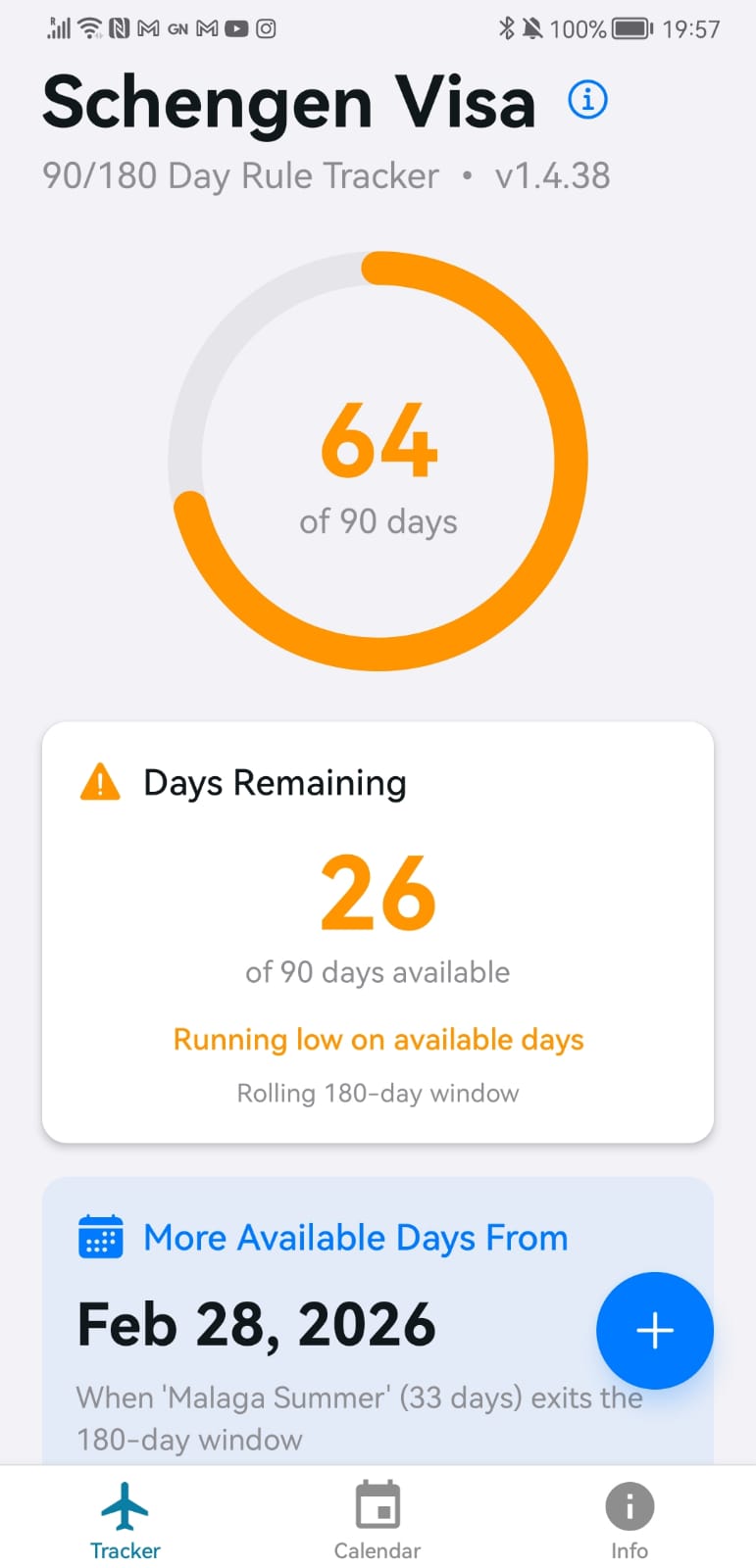
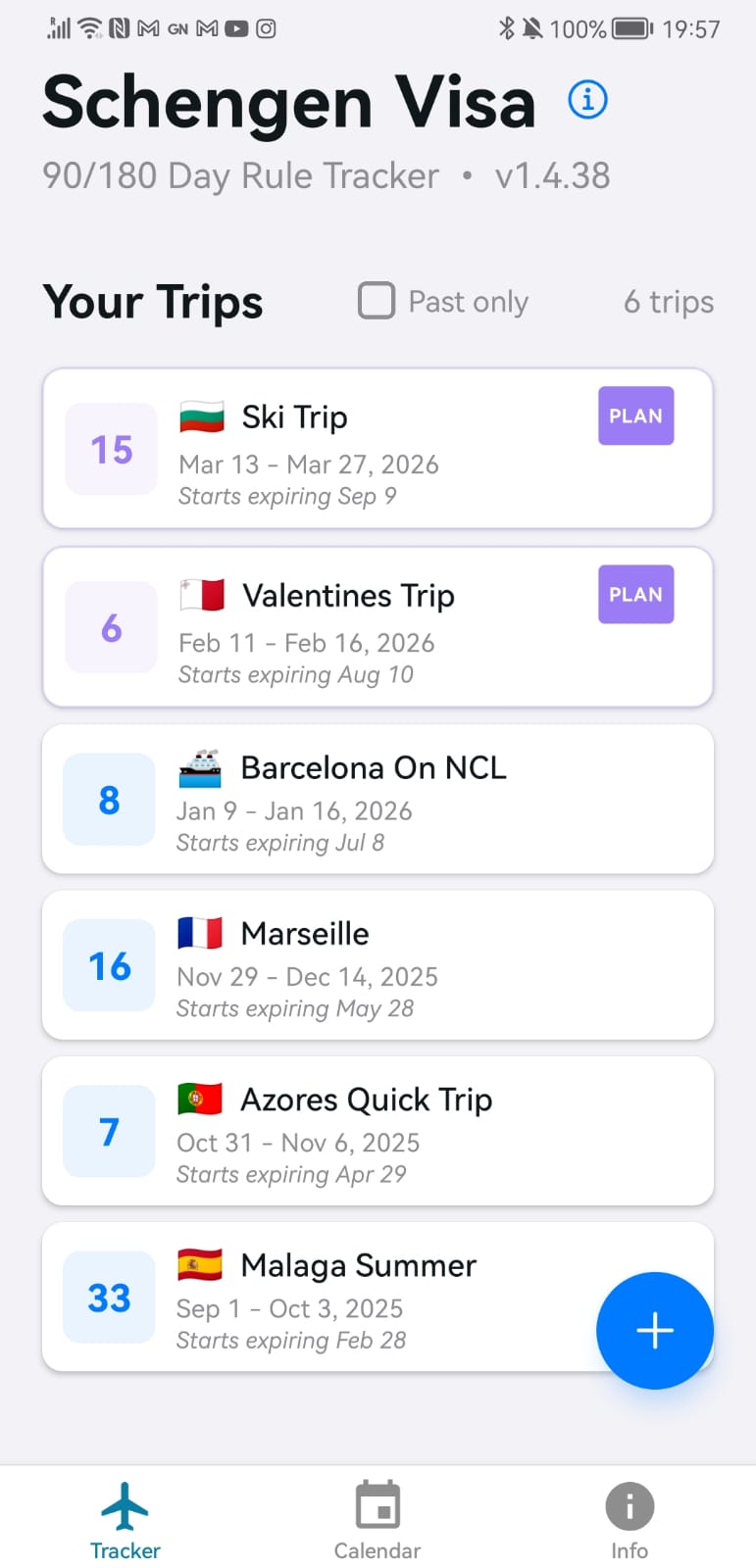
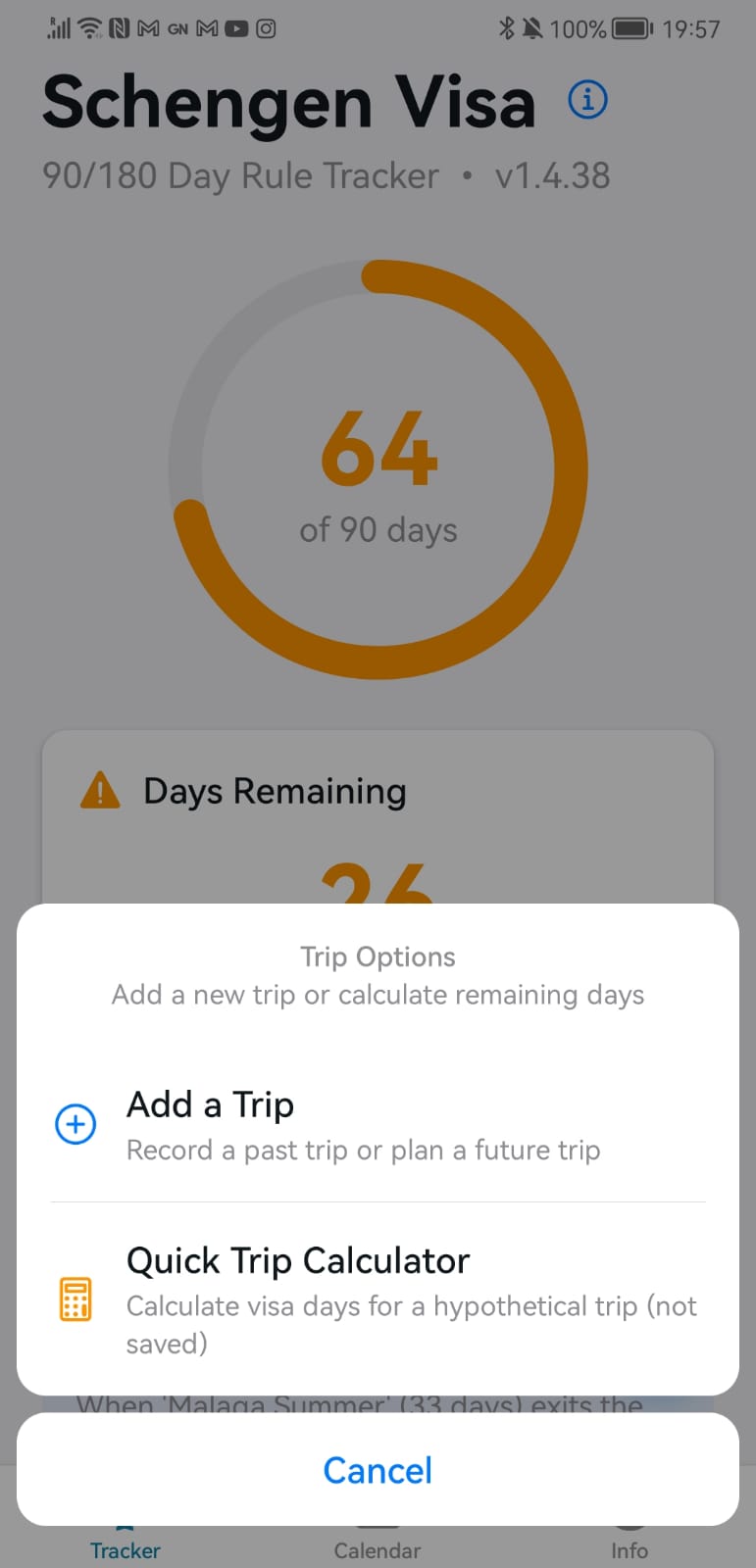
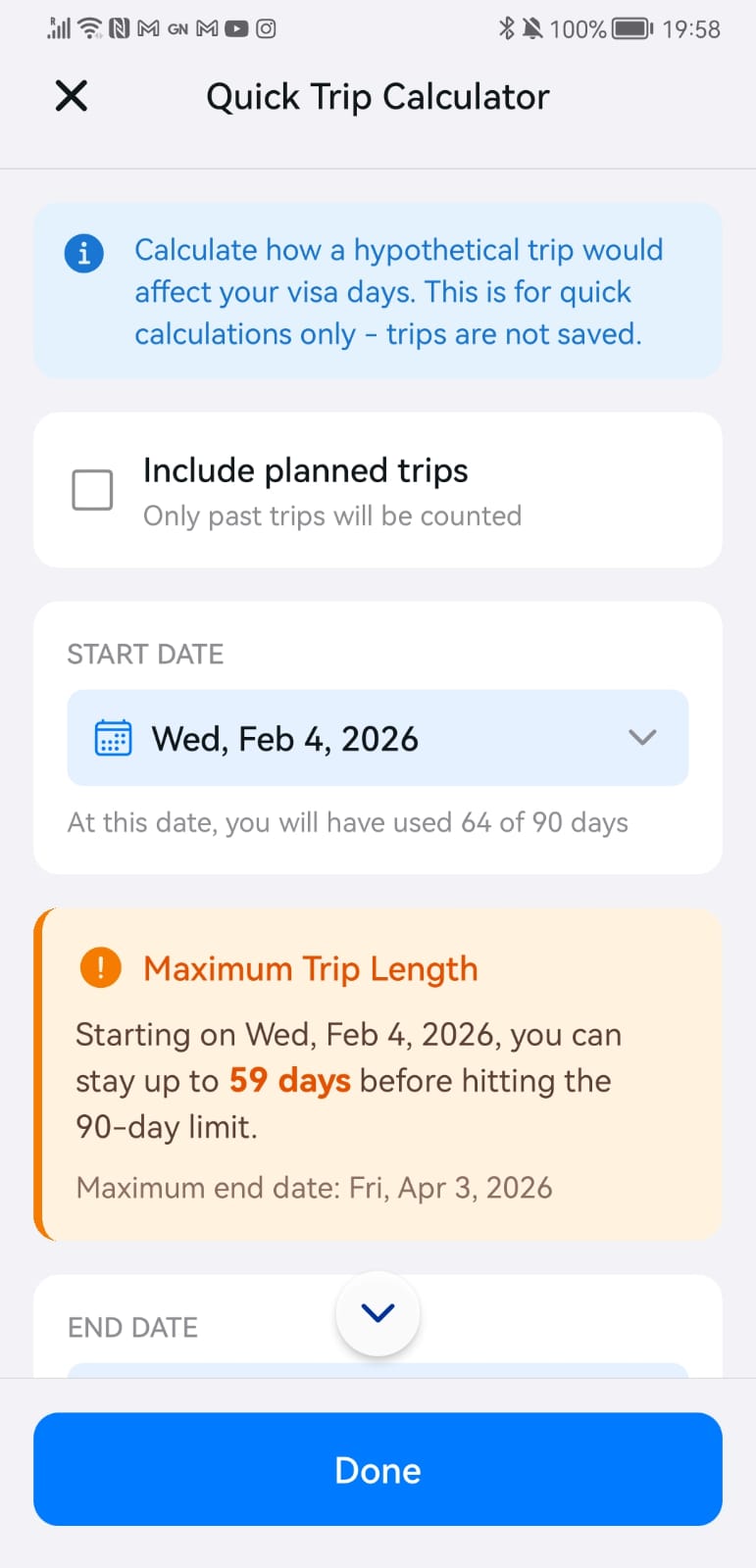
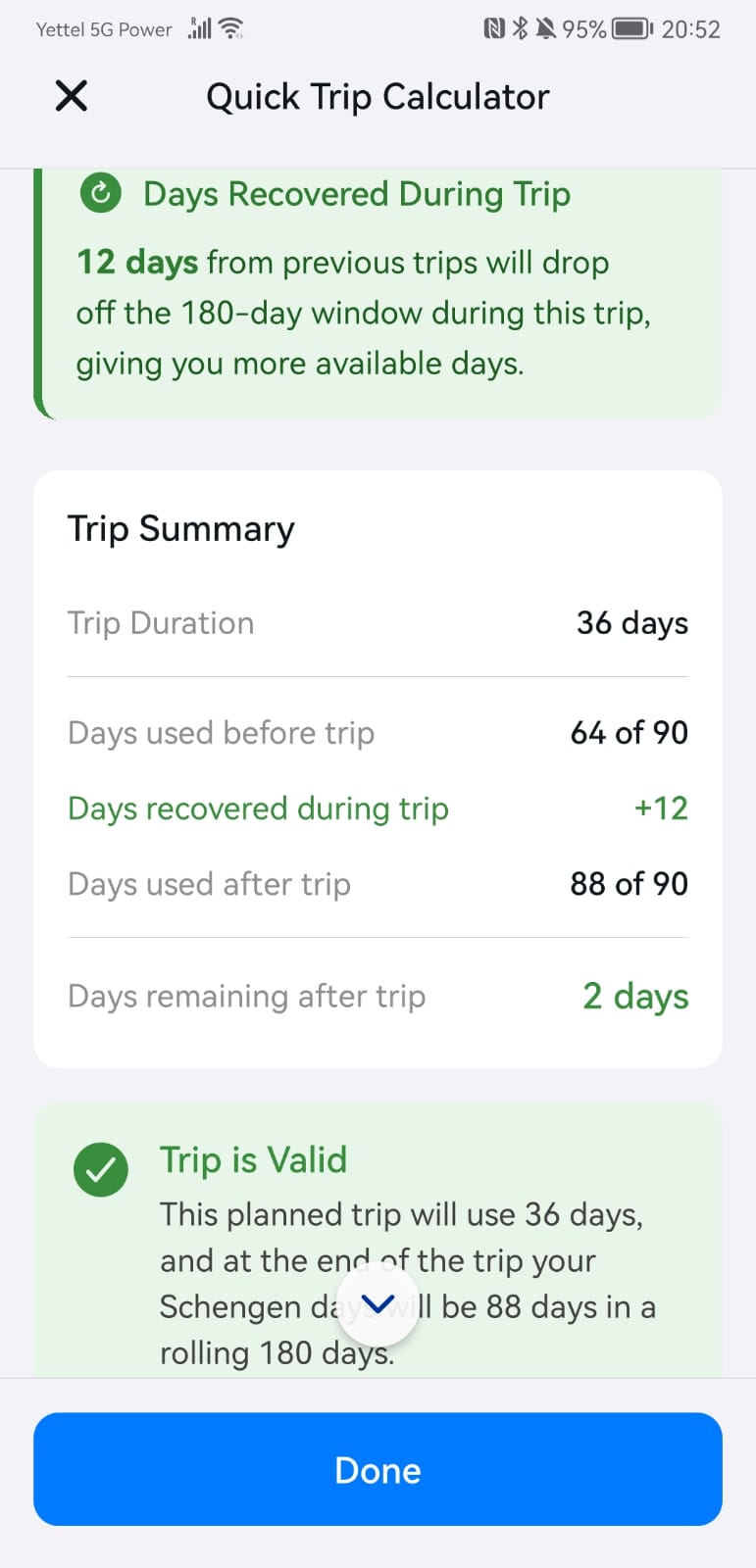
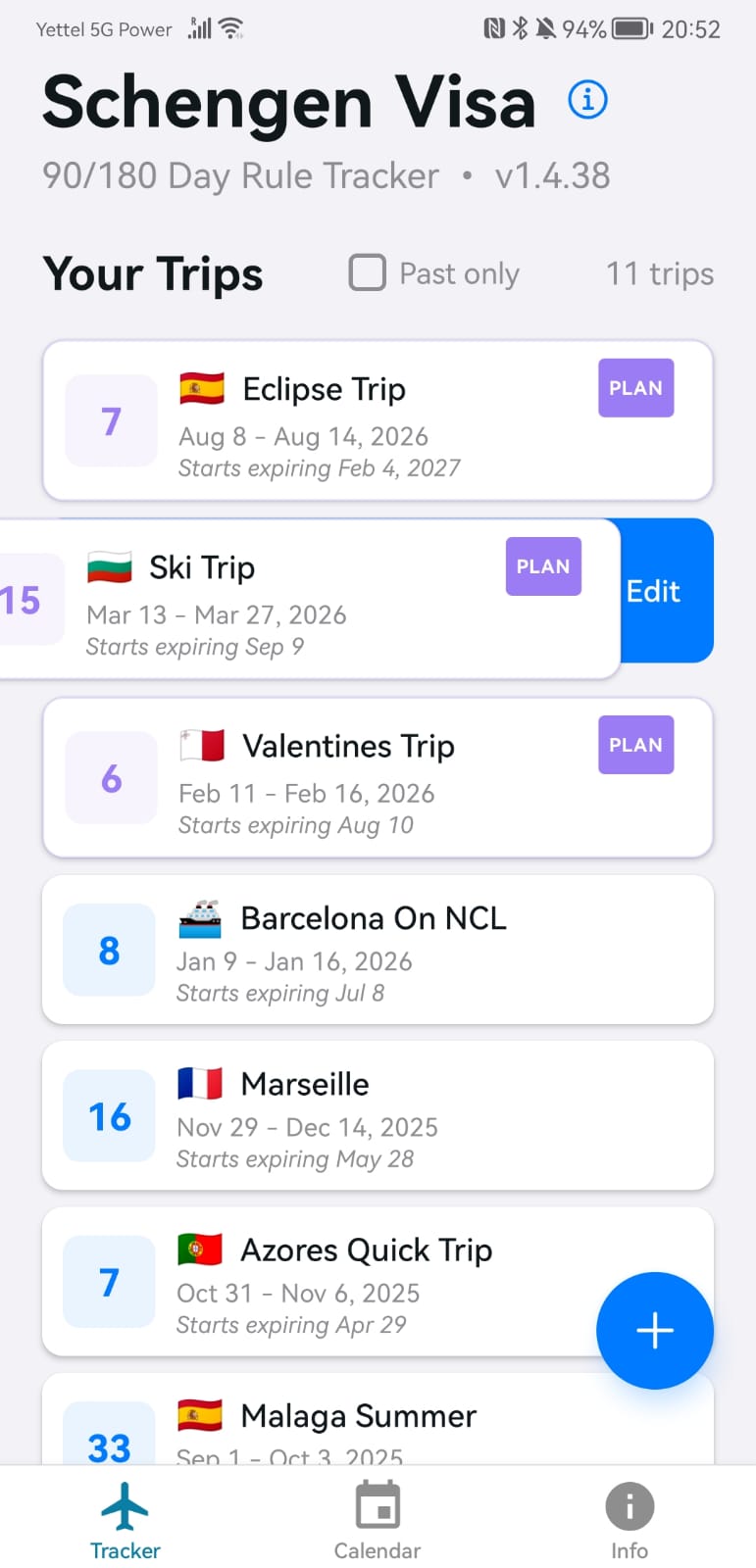
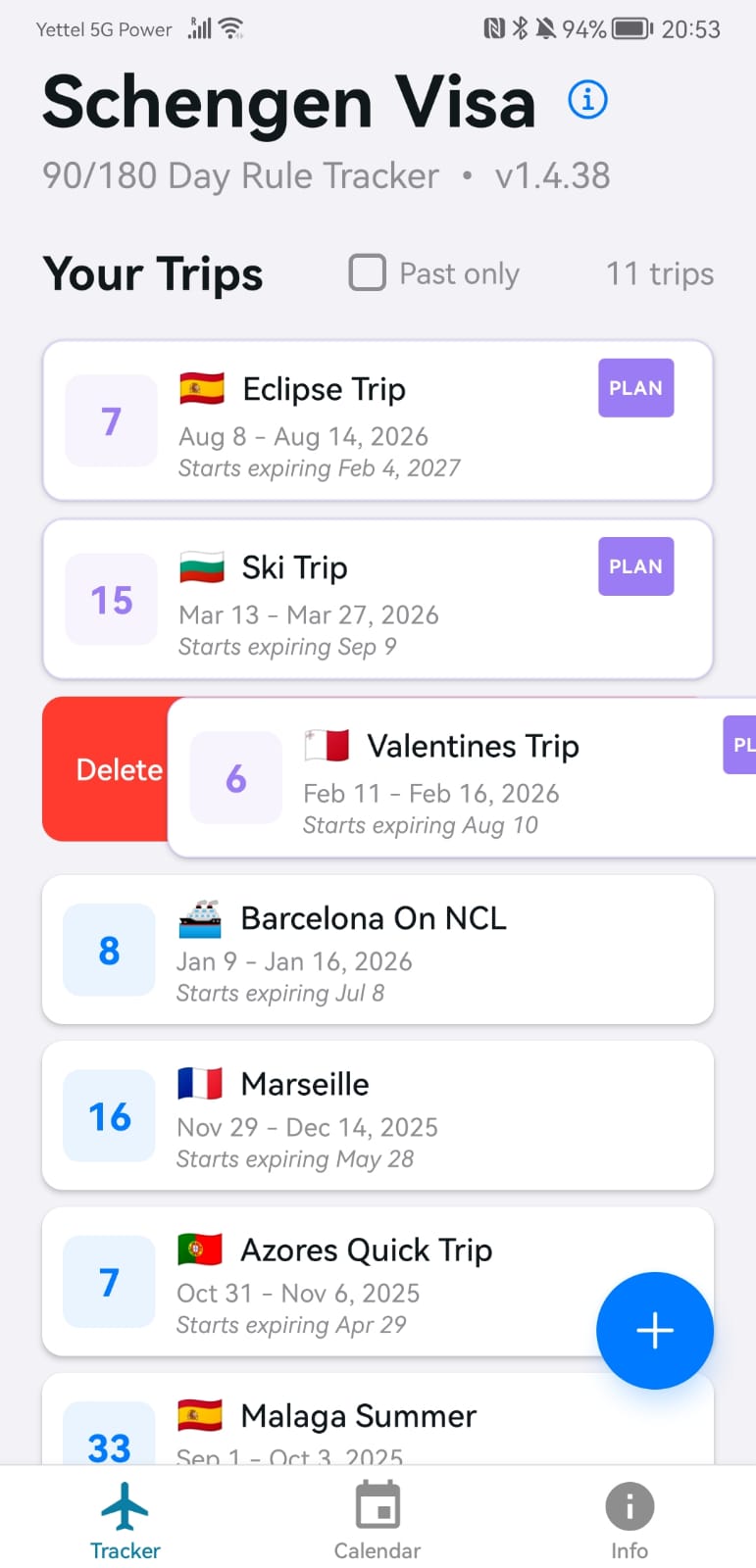
Manually calculating the rolling 180-day window is error-prone. A single miscalculation can result in an unintentional overstay. The Schengen Visa Tracker app automates this calculation — you simply log your trips and the app shows your exact remaining days in real time.
- Instant remaining days calculation
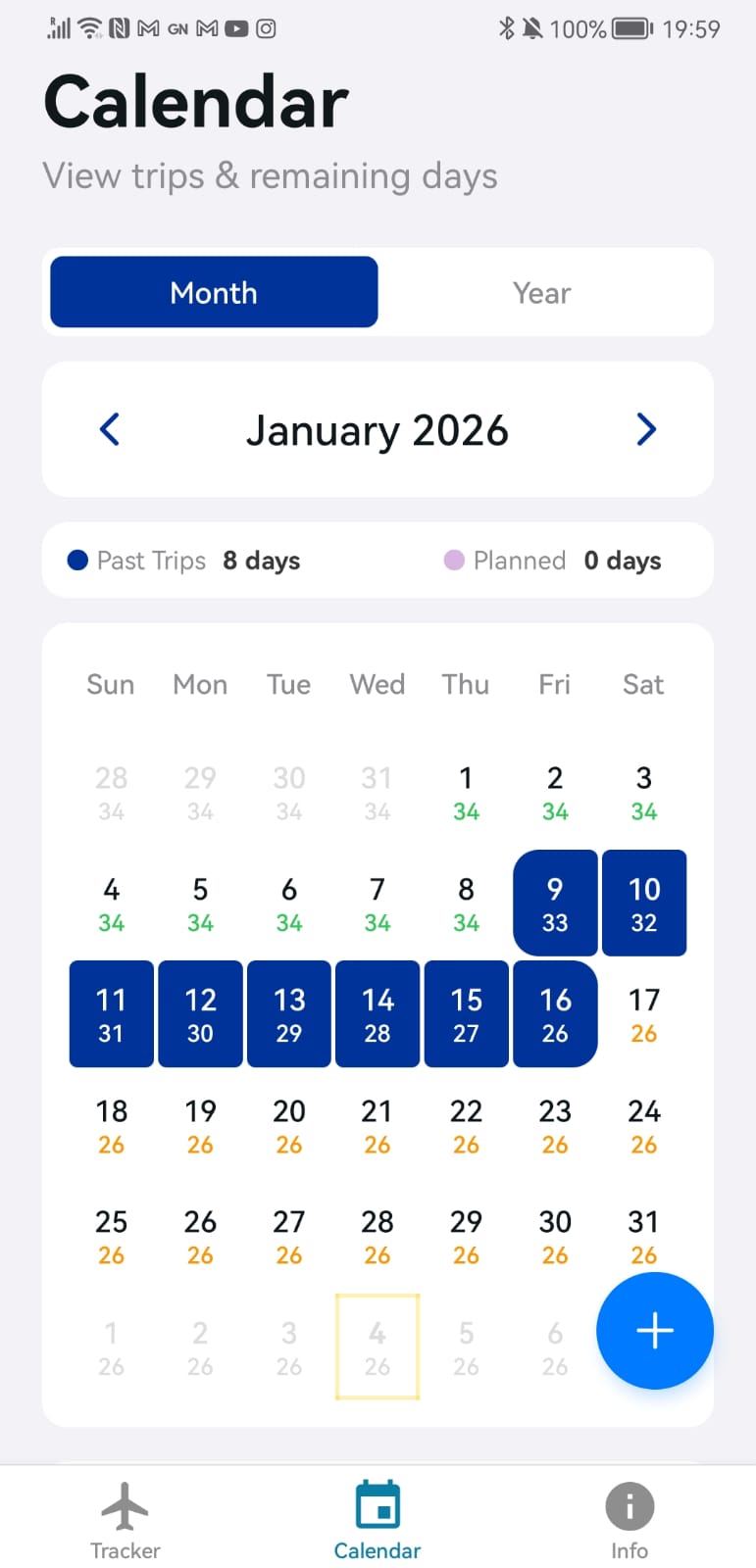
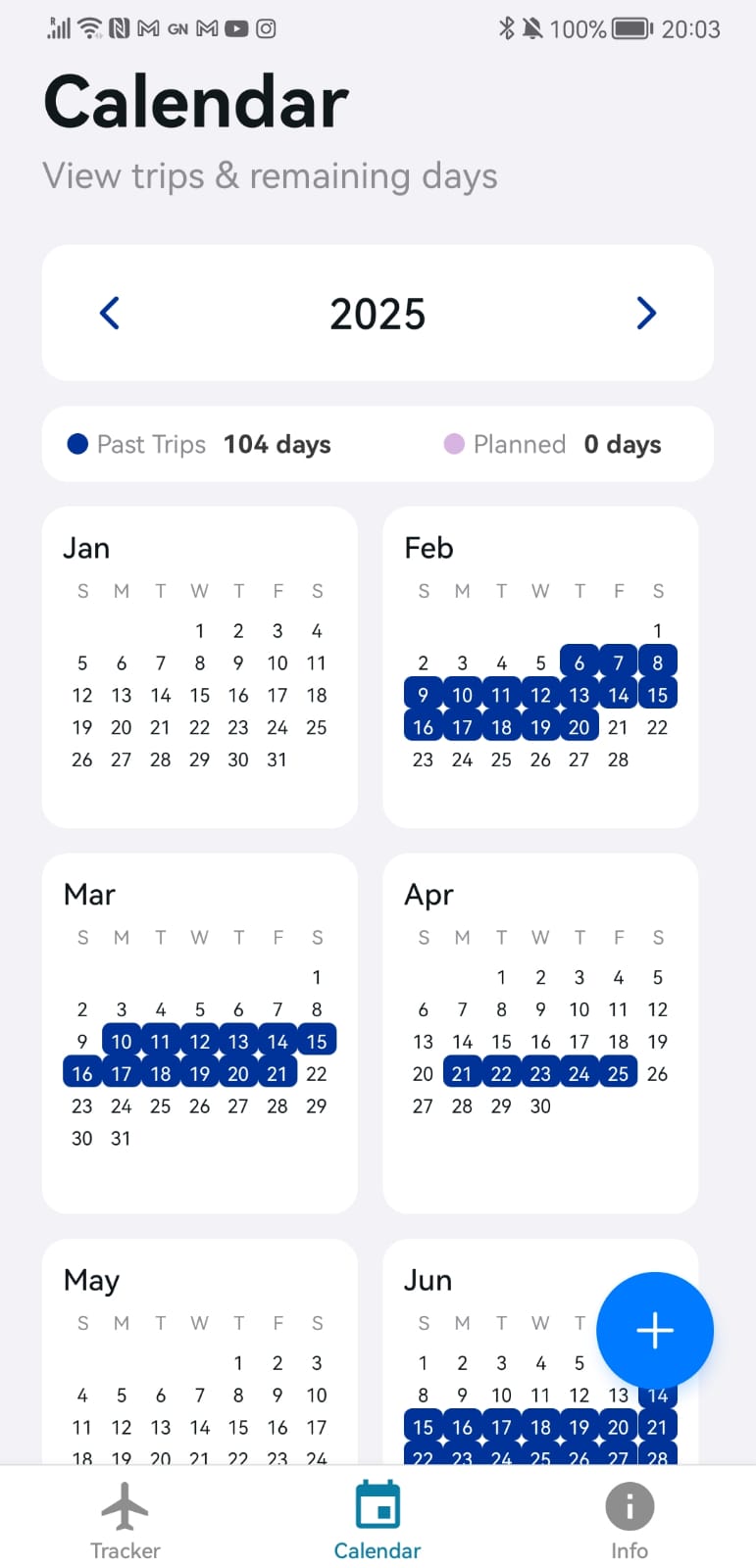
- Visual calendar showing Schengen vs non-Schengen days
- Future trip planning with automatic compliance check
- 100% offline — your travel data never leaves your device